Pure water is missing what coffee needs.
Pure water has almost nothing dissolved in it. Distilled and reverse osmosis (RO) water are the common kinds, and filters made to remove nearly all minerals can get there too. That makes pure water a clean, consistent place to start, and many cafés and home brewers now brew with it.
Hot water pulls flavor out of the coffee grounds. Bicarbonate provides alkalinity: the water's capacity to neutralize acids. It helps shape how much acidity reaches the cup, and its effect depends on how you brew.2 Calcium and magnesium contribute hardness and can interact with compounds in coffee.34 Pure water gives you a consistent starting point for choosing both.
Most pitcher and fridge filters take out chlorine and odors and leave most of the minerals in. If your tap water is high in minerals, a pitcher filter won't fix that, so start from distilled or RO. If your tap is already low in minerals, check the Tap Map.
Hardness calcium and magnesium, the minerals that interact with coffee compounds.34
Lower hardness. Fewer calcium and magnesium ions.
Our default.
Higher hardness. More calcium and magnesium ions.
Alkalinity bicarbonate, the buffer for acidity.2
Less buffer. More acidity remains.
Our default.
More buffer. More acidity neutralized.
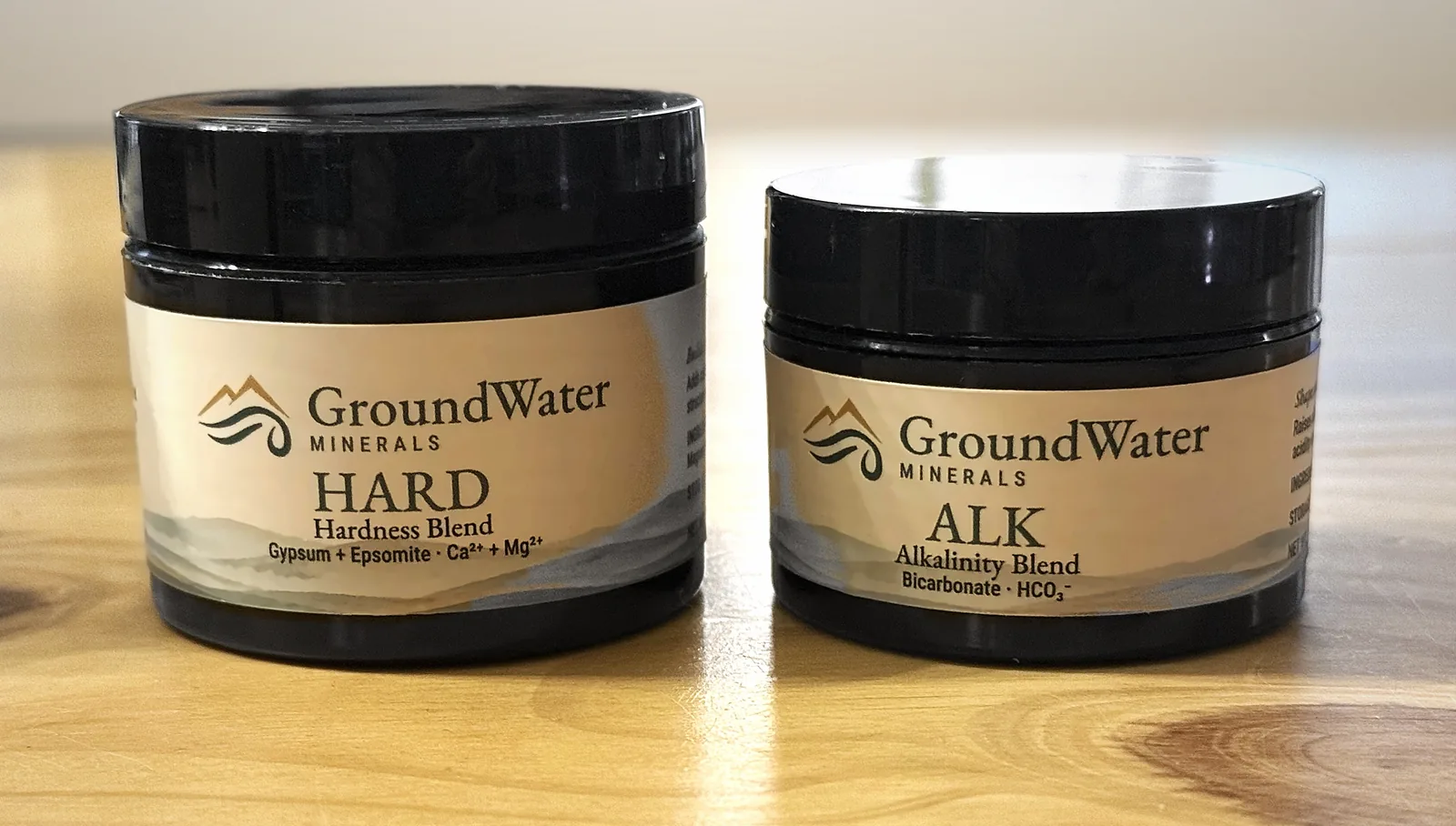
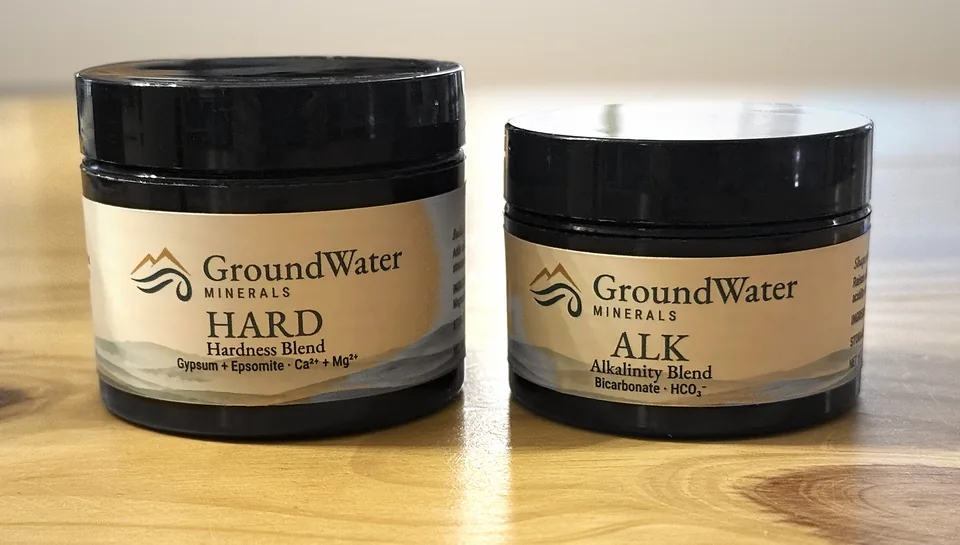
Turning the dials. HARD and ALK come in separate jars so you can change one without touching the other.
- More HARD: more calcium and magnesium.
- Less HARD: less calcium and magnesium.
- More ALK: more of the coffee's acidity is neutralized.
- Less ALK: more of the coffee's acidity stays in the cup.
Start with the default. Change one jar at a time so you can taste what it does.
Hardness and alkalinity also matter for equipment. Check the finished water against your machine maker's specification.5
Tap water gets its minerals from the ground it ran through, so how much, and which ones, change from town to town and season to season. GroundWater chooses them on purpose. It starts from pure water and adds calcium, magnesium and bicarbonate back in measured amounts, from three food-grade mineral salts. See how your town's tap compares.